





Moving from the West Coast to the East Coast sounds like a dream — a fresh start in a city with character, history, and seasons you can actually feel. Maybe you’re picturing yourself in a Boston brownstone or settling into a walkable neighborhood in Philadelphia. The excitement is real. But there’s something nobody warns you about until it’s too late: the geometry of your new building might reject your furniture entirely.
If you’ve been living in Los Angeles, Phoenix, or San Diego, you’re used to space — wide hallways, generous doorframes, and that effortless “open concept” flow where even the biggest sectional sofa fits without a second thought. The East Coast, however, plays by an entirely different set of architectural rules. And when your oversized West Coast furniture meets a narrow pre-war stairwell for the first time, things get complicated fast.
This guide breaks down exactly why that happens, what you can do about it, and how the right long-distance moving team turns a potential disaster into a smooth transition.
West Coast Open Concept vs. East Coast Pre-War Architecture
This isn’t just an aesthetic difference — it’s a structural reality that directly affects what furniture can physically enter your new home.
West Coast construction tends to be newer. Doorways are wider, ceilings sit higher, and floor plans are designed around the assumption that you’ll own large, modern furniture. Most of the time, what fits in the showroom fits in the house. No questions asked.
East Coast architecture tells a very different story. Many of the most desirable buildings in cities like New York, Boston, and Philadelphia were constructed before World War II — an era when the heaviest thing coming through the front door was a wooden trunk, carried in by hand. That means you’re likely dealing with narrow hallways that feel almost half the width of what you’re used to, tight spiral or switchback staircases with landings barely large enough to turn around on, and doorframes designed for a completely different scale of living.
Your California King bed — the one that looked perfectly proportioned in your Arizona master suite — suddenly feels like you’re trying to park a boat in a bathtub. And the problem isn’t always the bedroom itself. It’s the path to get there that creates the real obstacle.
The “Pivot Point” Problem: Where Simple Math Falls Apart
Here’s where most people make their first critical mistake. They measure the front door width, see that their couch is a couple of inches narrower, and assume everything will be fine.
It won’t.
The real challenge happens at what professional movers call the “pivot point” — that sharp angle on the staircase or in the hallway where the ceiling drops, the wall turns 90 or even 180 degrees, and suddenly your furniture has nowhere to go.
Why Your Furniture’s Diagonal Length Is What Actually Matters
Even if your sofa clears the building’s main entrance without a scratch, it can get hopelessly wedged between floors. The reason comes down to basic geometry: the diagonal length of any large piece of furniture must fit within the available clearance between the stairs and the ceiling at each landing. If it doesn’t, the piece simply cannot pass.
This is more common than you’d think. Industry experience shows that over 40% of furniture shipped from the West Coast requires some form of special handling when entering older East Coast buildings. And here’s the part that catches people off guard: in many pre-war stairwells, the ceiling height is actually lower than inside the apartments themselves. That means the trick of tilting furniture vertically to squeeze past a corner — a move that works in most modern buildings — often isn’t an option at all.
The takeaway is simple: don’t guess. Before you commit to shipping that oversized sectional across the country, get a professional assessment of your destination building. It’s the difference between a smooth move-in day and watching your expensive furniture sit on the sidewalk with nowhere to go.
The “IKEA Reverse” Strategy: Professional Disassembly That Saves Your Furniture
When the geometry says “no,” the answer isn’t to force it — it’s to take it apart intelligently. In the moving industry, this is sometimes called the “IKEA Reverse” approach, but don’t let the name fool you. This isn’t about flat-pack bookshelves. We’re talking about solid wood dining tables, custom bed frames, and high-end upholstered sofas that were never designed to be disassembled at all.
Here’s what professional-grade disassembly actually involves. First, the piece is deconstructed down to its smallest movable components before anyone even enters the building. Every bolt, bracket, and panel gets labeled and inventoried with precision — because reassembly in your new home needs to be flawless, not approximate. And critically, with high-end furniture, many joints are factory-glued or mechanically fixed in ways that make amateur disassembly almost guaranteed to cause permanent damage.
This is one of the areas where experienced movers like East Coast West Coast Movers make the biggest difference. Their teams carry specialized tools and have the hands-on knowledge to surgically take apart furniture that wasn’t built to come apart, navigate it through impossibly tight spaces, and put it back together so perfectly you’d never know it moved.
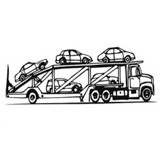
Auto Transport
East Coast West Coast Express ships all kinds of vehicles, regardless of their shape, size, price, or weight. From scooters to trucks, if you need it shipped, we can do it.
Read More
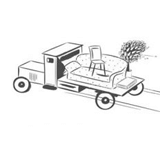
Moving Insurance
All your belongings are insured from the moment our professional movers lay their hands on them first, until they are all safely delivered to your front door and unpacked by our personnel.
Read MoreClimate Shock: What Happens When Your Wood Furniture Changes Zip Codes
One of the most overlooked risks of a cross-country move has nothing to do with tight hallways. It’s about what happens to your furniture after it arrives.
Picture this: your solid oak dining table has spent years in the dry heat of Arizona or the mild, low-humidity air of inland California. The wood has stabilized to that environment — every joint, every drawer, every surface has found its equilibrium. Now imagine that same table arriving in a humid Boston summer or a damp Philadelphia basement apartment.
The moment it hits that new air, biology takes over.
Wood fibers absorb moisture and swell. Those carefully measured millimeters of clearance you had back in Phoenix? Gone. Drawers that used to glide smoothly now stick and bind. Joints that were perfectly snug become stressed. And if the change happens too quickly — like moving from a humid truck into a bone-dry, heated apartment in January — you risk permanent warping or cracking that no amount of repair can fully undo.
This is exactly why serious cross-country movers use climate-controlled transport and understand the importance of gradual acclimation. It’s not a luxury service — it’s material science applied to your belongings.
Why Shipping Your Car Makes More Sense Than Driving It
When you’re planning a coast-to-coast move, the idea of driving your car across the country has a certain romantic appeal. But in practice, it’s often the most expensive and exhausting option on the table.
The drive from Los Angeles to New York covers roughly 2,800 miles. That’s significant wear on your engine, tires, and brakes — mechanical costs that don’t show up on a gas receipt but absolutely show up at your next service appointment. When you factor in fuel, hotels, meals, and the risk of roadside breakdowns, professional auto transport frequently comes out more cost-effective than the DIY road trip. And there’s a cost that’s harder to quantify but just as real: your time. Moving across the continent means you need to be at your destination for paperwork, lease signings, job starts, and helping your family settle in. Spending 5 to 7 days behind the wheel is time you probably can’t afford to lose.
 Don't let relocation stress get to you—our moving team is here to help.
East Coast West Coast Movers offers an integrated service that handles your household goods and your vehicle in a single coordinated move. Your car arrives safe, clean, and ready for East Coast roads — while you fly ahead and focus on everything else.
How to Prepare: Your Architectural Survival Checklist
A little preparation before moving day can save you enormous stress and unexpected costs. Here’s what to do before you pack the first box:
- Measure the “pivot points” at your destination. If you can’t visit in person, ask your landlord or real estate agent for a video walkthrough of the stairwell and exact dimensions of the narrowest hallway sections.
- Check the elevator dimensions. In older buildings, elevators are often surprisingly small. Measure the depth, width, and height of the cab — don’t assume it can handle large items.
- Hold off on new furniture purchases. If you’re tempted to buy that new sectional right before the move — don’t. Wait until you’ve seen the space and, more importantly, the path to the space.
- Get proper moving insurance. For a long-distance move, comprehensive coverage isn’t optional. It’s the financial safety net that protects you if something goes wrong.
- Understand building move-in requirements. Most East Coast buildings require a Certificate of Insurance (COI) and have specific rules about moving days and hours. Professional moving companies handle this paperwork routinely — it’s one less thing on your plate.
Why Professional Movers Are Worth Every Dollar on a Cross-Country Move
Moving from one side of America to the other is a logistical operation on a scale most people underestimate until they’re in the middle of it. Trying to handle it yourself — especially when you’re dealing with historic architecture, climate changes, and 2,800 miles of highway — often leads to damaged furniture, missed deadlines, and a level of stress that overshadows what should be an exciting new chapter.
Here’s what working with East Coast West Coast Movers looks like in practice. Before anything gets loaded onto a truck, their team conducts an expert assessment to identify “problem furniture” — the pieces that are going to need special handling at your destination. They use specialized protective materials and equipment designed for navigating tight, unforgiving spaces without leaving a mark. And their pricing is built around transparency — a precise quote with no hidden fees, so you know exactly what you’re investing before the move begins.
Whether you’re relocating a studio apartment from downtown San Francisco to the heart of Boston or shipping a luxury vehicle from Seattle to Miami, this is a team built to bridge the distance.
Final Thought
A cross-country move is one of life’s biggest transitions. Don’t let “geometric shock” steal the excitement of your fresh start. East Coast architecture is full of charm and history — but it demands respect, planning, and the right team on your side.
With the right support, your California King bed doesn’t have to hate the East Coast. It just needs a crew that knows how to get it through the door.
FAQ
Can a California King bed actually fit in a New York apartment?
In terms of floor space, usually yes. But getting it to the bedroom is the real challenge. In many cases, the frame needs to be stripped down to individual slats and rails. If the mattress is too rigid to bend through a tight stairwell, the only remaining option is sometimes hoisting it through a window — a specialized service, but one that experienced movers handle regularly.
How long does auto transport take from the West Coast to the East Coast?
Expect a window of 7 to 14 business days, depending on the specific route and weather conditions. Your vehicle is fully insured throughout the entire transport process.
What if my sofa physically cannot fit into the building?
It happens, and a good crew will assess the situation on-site before forcing anything. If entry is truly impossible, options include temporary storage while you decide whether to sell the piece, donate it, or swap it for something that fits the new space.
Is humidity really a serious concern for furniture?
Absolutely — especially for antiques and solid wood pieces. After a cross-country move, it’s best to avoid treating wood furniture with harsh chemicals or polishes for at least two weeks, giving the material time to adjust naturally to the new humidity level.
How do I get the most accurate moving quote?
Be specific. List every oversized or unusual item — California King beds, pianos, antique armoires — and describe the entrance to your new building in as much detail as possible. Include stairwell width, elevator dimensions, and any tight turns. The more information your movers have upfront, the more precise and reliable your quote will be.